
Customer from Texas
Just now



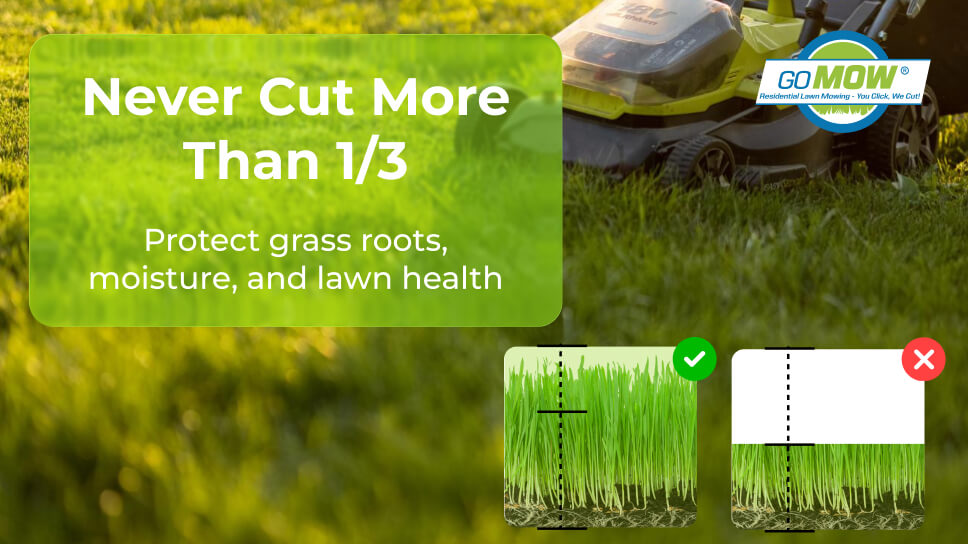
The one-third rule for lawn mowing states mowing should never remove more than one-third of the grass blade height in a single session of lawn mowing. Cutting a lot at once can cause shock on the grass, weaken its roots, and expose it to weeds, pests, and disease. Following the one-third mowing rule stimulates deeper root growth development, healthier turf, and a greener, more resilient lawn. Change your mowing frequency based on grass growth rate, and always keep your lawn mower blades sharp for clean cuts that encourage quick recovery.
This is a common lawn mowing rule that recommends cutting lawn grass only about a third of its entire length to encourage healthy growth through an annual lawn cycle. When mowing is done correctly at the right mowing height, lawns will look better for it without stress homeowners.
In this post, we discuss lawn care tips for Texas homeowners, especially how they can maintain the one-third mowing rule which is part of healthy lawn care. We hope that the information contained here will help both new and experienced homeowners to take better care of their lawns.
Lawn mowing is a necessary part of caring for lawns and when done correctly can have a lasting impact on how a lawn turns out. First, there are 2 major lawn mowing plans considered by homeowners – the first is weekly lawn mowing and the second is biweekly lawn mowing.
Both plans work well but they’re not the same. While weekly lawn mowing is suitable for fast-growing lawns, biweekly lawn mowing is more suited to slow-growing species like Zoysia grass.
Lawn mowing, when done wrongly can cause shock which leads to poor metabolism and growth. However, if Texas lawn mowing is done properly, it fosters improved curb appeal and healthier leaf and root development.
These are some benefits of the one-third rule in lawn mowing:
The one-third rule helps lawns develop deeper roots which is essential in accessing water, absorbing nutrients and being sturdy in the soil.
With the one-third rule in place, there’s a decent amount of grass clippings on the lawn after a mowing session. It’s neither too small or too much, which means faster decomposition and absorption. Use of a mulch-mower can help with reintroducing cut grass back into the lawn surface with ease.
Plants carry out their metabolic activities starting with photosynthesis. However, when too much leafy parts are cut off, carrying out photosynthesis becomes difficult for plants. With less metabolic ability than before, lawns begin to lose energy and turn brown. If not sorted out by a lawn mowing service Texas, this condition can lead to a dying lawn yard. Adhering to the one-third rule helps the lawn’s photosynthetic process.
Lawn grass needs to absorb nutrients and moisture to perform its metabolic activities. When mowing is bad due to scalping, it has a negative effect on the lawn growth leading to poor root development. Shallow roots mean absorption of nutrients is below average or worse, poor. However, a healthy lawn care cut which adheres to the one-third rule has better roots and efficient nutrient absorption ability.
When the lawn is cut at the right mowing height without failing the one-third rule, the lawn develops greater resilience and immunity to ward off stress, survive infections and cope with pests.
Factors like weather conditions, stressful climate, infections, stubborn weeds, poor lawn care and pests can all take their toll on a lawn. Following the one-third rule can strengthen the lawn against these problems.
Whether it’s DIY lawn care or hiring for a lawn mowing service near me, knowing how to apply the one-third rule is important in order to get the most out of it. In our experience, these are things you need to know about the application of this rule:
It is impossible to apply the one-third rule on a lawn without knowing the ideal height of the grass species. Different types of grass have their specific ideal mowing heights. For example, grasses like Bermuda have higher mowing heights than Zoysia grass.
Below is a breakdown of how this works:
Bermuda Grass – 1.5 to 3 inches

Zoysia Grass – 1.5 to 3.75 inches
Buffalo Grass – 2 to 4 inches
St. Augustine Grass – 2.5 to 5 inches
Bahia Grass – 3 to 4 inches
Centipede Grass – 1.5 to 2 inches
Knowing the right mowing height to apply the one-third rule is one thing, adjusting the mower blades properly is another. Lawn mowers typically have an adjusting lever for setting the blades to a preferred height. To avoid making mistakes or having accidents, hire a Texas lawn mowing service to make your mower adjustments the right way.
Following the one-third rule for mowing is recommended practice for regular grass cutting. However, for busy homeowners who may not have the time to mow consistently and correctly, hiring a lawn mowing service near me is an option to consider.
Delegate to lawn care professionals if:
As a matter of fact, hire professional lawn mowing, TX if you have doubts. GOMOW Lawn Care Service provides an affordable, high quality mowing experience for homeowners in different cities in Texas.
To get started, visit GOMOW to book a FREE quote today.
The 1/3 rule of mowing means to never cut more than one-third of the grass blade's height in a mowing session. This can minimize stress on the lawn, promote healthy growth, and enhances the look of the grass.
Cutting too much leafy grass at once can weaken your lawn by reducing photosynthetic ability. Following the 1/3 rule encourages stronger roots, enhances drought tolerance, and cuts down the risk of weeds, pests, and lawn diseases.
The lawn mowing schedule you choose depends on your grass type and growing conditions. In peak lawn growing seasons, you may need to mow weekly, while slower-growing periods may only require mowing every 10 -14 days. These are where weekly or biweekly lawn mowing plans are applicable.
Cutting too much at once can lead to what is called scalping, which leaves your lawn stressed, discolored, and exposed to weeds and disease. If scalping occurs, counter it by watering the lawn properly and stop mowing until it has recovered.
Yes, it’s a mowing rule that applies to types of lawn grass. Whether you have Bermuda, St. Augustine, Zoysia, Kentucky bluegrass, or fescue species, the 1/3 rule is a top-recommended mowing practice that promotes healthier, thicker, and more resilient grass.
 ;
;
Download and Book services, track visits, and stay updated all from the GoMow Customer app.