

What Happens to Texas Grass in Fall?
Warm-season grasses such as Bermuda, St. Augustine, and Zoysia slow down as temperatures fall. The pace can vary across Texas due to local weather, grass type, sunlight, rain, and soil conditions.
During the Texas grass dormant season, growth can slow to a point where the grass enters dormancy. Color can fade, and the need for mowing drops.
There is no single date when every Texas lawn reaches this stage. A lawn in North Texas can respond at a different time from one in South Texas. Even nearby yards can show different growth rates.
Watch the grass itself. If it keeps reaching its usual mowing height, keep the mower in the routine. If growth slows and the grass takes longer to reach that height, increase the gap between cuts.
Texas Lawn Care Checklist for Fall
Use this Texas lawn care checklist as a quick fall review:
- Check how fast the grass is growing
- Adjust the mowing schedule as growth slows
- Keep the right mowing height for the grass type
- Remove leaves and heavy debris
- Check for summer stress and lawn damage
- Review irrigation based on rain and soil moisture
- Look for weeds, pests, or signs of disease
- Check thin and bare areas
- Keep mowing while active growth continues
- Get the lawn ready for dormancy
The checklist covers the main work needed before the lawn enters its dormant period. The right timing can vary with grass type and local conditions.
How Should You Change Your Mowing Routine in Fall?
Fall mowing in Texas should follow the rate at which the grass grows.
During summer, many lawns need frequent mowing. Fall brings cooler nights and lower growth rates. The grass may take several extra days to reach its mowing height.
You can then space out mowing sessions.
Do not wait until the grass has grown far past its normal height. Cutting a large amount in one session can put stress on the turf. Keep the mower set to a height that suits the grass type.
Look at the lawn before each cut. If there is enough new growth to warrant mowing, cut it. If there is little new growth, give it more time.
When Should You Reduce Mowing Frequency?
There is no single fall mowing schedule for all Texas lawns.
Look for signs of slower growth:
- Grass takes more time to reach mowing height.
- Fewer clippings come off during a cut.
- Several extra days pass before another cut is needed.
- Temperatures stay lower.
- New leaf growth slows.
A weekly mowing schedule may work during summer and then spread out as fall sets in. Let the grass set the pace.
Shade, rain, irrigation, soil condition, and grass type can also affect growth. A lawn with good sun exposure may keep growing after a shaded lawn has slowed down.
How Should You Handle the Final Mow Before Dormancy?
The final mow should match the lawn’s current growth.
Before that cut, check the grass height, grass type, recent weather, and amount of new growth. If the lawn needs a cut, mow at its normal fall height.
Do not cut the grass very short just because winter is near. Removing a large amount of leaf tissue in one session can add stress to the turf.
There is also no need to pick a fixed date for the final mow. If the grass keeps growing, it may need another cut. Once active growth has slowed enough, routine mowing can stop.
Adjust Watering as Your Lawn Enters Dormancy
A summer irrigation schedule may not suit the lawn in fall.
Cooler weather can reduce water use. Rain can also supply some or all of the lawn’s current needs. Check the soil and grass before running the irrigation system.
Look at:
- Recent rainfall
- Soil moisture
- Current temperature
- Grass condition
- Irrigation coverage
- Local weather
Avoid running the same summer schedule without checking the lawn first. At the same time, do not assume dormant grass needs no water in every case.
Grass type, soil, rain, and local weather all affect water needs.
Clean Up Leaves and Heavy Lawn Debris
Leaves are a routine fall task. A thick layer left on the grass can block light and hold moisture against the turf.
Clear heavy leaf cover as it builds up. Remove fallen branches and other debris that sit on the lawn.
A few loose leaves are different from a dense layer across the turf. Keep the grass surface clear as fall progresses.
Check Your Lawn for Summer Damage
A Texas summer can leave thin or damaged areas behind.
Walk across the lawn and look for:
- Thin grass
- Bare patches
- Brown or faded sections
- Areas with poor irrigation coverage
- Compacted soil
- Spots that did not recover after summer stress
Do not assume every damaged area came from heat. Poor irrigation, pests, disease, foot traffic, soil issues, and grass type can also cause weak growth.
Fall gives you a chance to inspect these areas before the lawn enters dormancy. If a patch stays thin or keeps changing color, look for the cause before choosing a repair method.
What Should You Do About Thin or Bare Areas?
Start with the cause.
Check sunlight, soil moisture, foot traffic, drainage, irrigation coverage, and the grass type. The right repair timing can also depend on local temperatures and how much active growth remains.
Some lawns may have enough growing time for repair work in fall. Others may need to wait until conditions suit the grass again.
Avoid using the same repair method for every bare patch. A bare area caused by shade needs a different response from a patch caused by irrigation trouble or soil compaction.
Does Grass Type Change Fall Lawn Preparation?
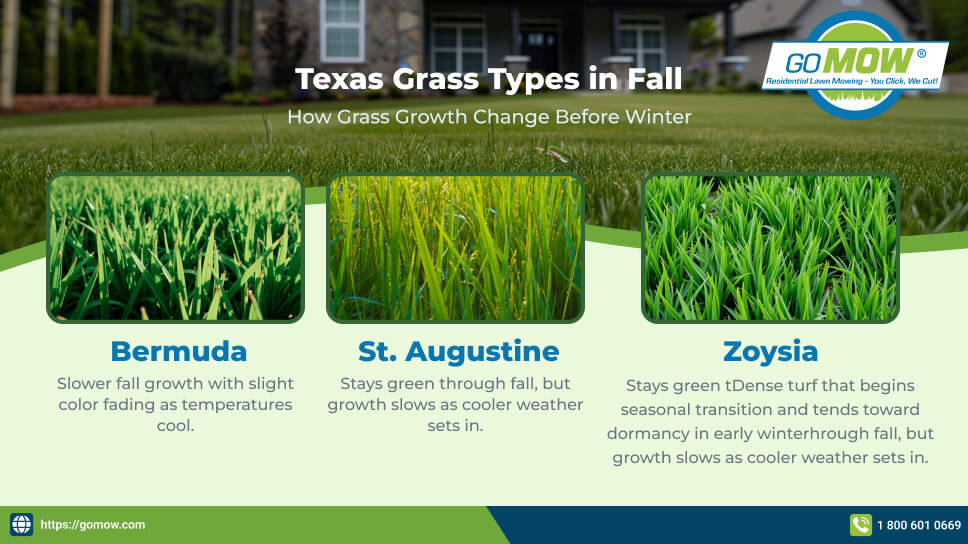

Yes. Bermuda, St. Augustine, and Zoysia are warm-season grasses, yet each can respond to fall weather at a different pace.
Bermuda can lose active growth as temperatures drop and may enter dormancy with colder weather. St. Augustine also slows as temperatures fall. Zoysia can keep growing under conditions that have already slowed other warm-season grasses.
Your mowing routine should match the grass in your yard.
Check the grass type before changing mowing height or frequency. Sun exposure, soil, rain, and irrigation also affect how fast growth slows.
How Do You Prepare a Texas Lawn for Winter?
To prepare lawn for winter, keep the fall routine tied to grass growth and current lawn needs.
Follow these steps:
- Keep mowing while the grass is still growing.
- Space out cuts as growth slows.
- Keep the mowing height suited to the grass type.
- Avoid cutting a large amount of grass in one session.
- Clear heavy leaves and debris.
- Check for damage left by summer heat or other causes.
- Adjust irrigation based on rain, soil moisture, and weather.
- Look for weeds, pests, and signs of disease.
- Keep checking the lawn until active growth has slowed enough to stop routine mowing.
This gives you a simple way to prepare Texas lawn for dormancy without forcing the lawn into a fixed seasonal schedule.
Texas Winter Lawn Preparation: What Should You Avoid?
Good Texas winter lawn preparation starts with a few habits worth avoiding.
Stopping Mowing Too Soon
Cool weather does not always mean grass growth has stopped. If the lawn keeps reaching its mowing height, keep cutting as needed.
Cutting Too Much at Once
Do not use the final mow as a reason to cut off a large amount of grass. Keep the cut within the range suited to the grass and its current height.
Keeping the Summer Schedule
A weekly mowing routine may no longer fit once growth slows. Check the lawn before each cut and add more time between sessions when needed.
Overwatering
Fall rain and cooler weather can lower the lawn’s water needs. Check soil moisture before running irrigation.
Leaving Thick Leaf Cover
Do not let a dense layer of leaves sit on the grass for long periods. Clear the lawn as leaf cover builds.
Ignoring Damaged Areas
Thin grass, bare spots, and lasting discoloration can have several causes. Check these areas before the lawn enters dormancy.
Using the Same Routine for Every Grass Type
Bermuda, St. Augustine, and Zoysia can slow down at different rates. Keep grass type in mind when setting mowing and watering routines.
When Does a Professional Lawn Mowing Service Make Sense in Fall?
Fall can make mowing schedules harder to manage. The lawn may need a cut one week and need several extra days before the next one.
Homeowners who travel, have limited time, or do not want to track grass growth can hire a Professional Lawn Mowing Service In Texas for routine mowing.
A recurring mowing service can keep the lawn cut while active growth continues, with the schedule based on the lawn’s needs as fall moves ahead.
This can help homeowners avoid guessing when the next mowing session should happen.
Keep Your Texas Lawn Ready for the Dormant Season With GOMOW
Fall lawn care comes down to watching the grass and adjusting the routine as growth slows. Keep mowing while the lawn grows, clear heavy leaves, check summer damage, and review watering as weather conditions change.
If you do not want to track these changes on your own, GOMOW Lawn Care Service can handle recurring lawn mowing while your grass remains active.
Frequently Asked Questions
When should I start fall lawn care in Texas?
Start when temperatures fall and grass growth begins to slow. The timing depends on local weather, grass type, and lawn condition.
How often should I mow my lawn in Texas during fall?
Mow when the grass reaches its mowing height. As growth slows, allow a longer gap between cuts.
Should I stop mowing my lawn before winter?
Stop routine mowing once active growth has slowed enough that the grass no longer needs regular cuts. Do not use a fixed date as the only guide.
How do I prepare my Texas lawn for dormancy?
Keep mowing while growth continues, adjust watering, clear heavy leaves, check lawn damage, and watch for weeds, pests, or disease.
Should I water dormant grass in Texas?
It depends on grass type, soil moisture, rainfall, weather, and local conditions. Check the lawn before adding water.


