

How Are Bermuda and St. Augustine Mowing Needs Different in Texas?
Bermuda and St. Augustine both need regular mowing during active growth, but their mowing height, growth rate, and seasonal response can differ. A lawn mowing schedule should account for grass type, weather, irrigation, and how fast the lawn reaches its mowing height.
Bermuda vs. St. Augustine: What is the Main Mowing Difference?
The first thing to notice is the height. Bermuda is kept much shorter than St. Augustine. That alone changes how soon the lawn reaches its next mowing point.
| Mowing Factor | Bermuda Grass | St. Augustine Grass |
| Growth habit | Spreads through stolons and rhizomes. | Spreads through above-ground stolons. |
| Mowing height | About 1 to 2 inches for many home lawns. | About 2 to 4 inches for many home lawns. |
| Active growth | Can need frequent cuts during warm weather. | Needs regular cuts while growth is active. |
| Summer | Fast growth can bring quick mowing cycles. | Warm weather can call for regular mowing at a taller height. |
| Fall | Growth slows as temperatures fall. | Growth slows as temperatures fall. |
| Winter | Can enter dormancy. | Can enter dormancy. |
| Schedule | Watch grass height and growth rate. | Watch grass height and avoid heavy cuts. |
The grass type sets the starting point. The lawn itself tells you when to mow.
How Bermuda Grass Affects Your Mowing Routine
Bermuda grass lawn care is tied to how high you cut it. Most people keep a home Bermuda lawn at about 1 to 2 inches. When you mow at that level, the blades grow quickly, so you end up needing a cut sooner, especially in hot weather with enough water.
In the middle of summer, that can mean mowing every week. Still, a 7-day schedule is not a hard rule for every lawn. If you get a dry stretch, cooler days, or a shift in irrigation, growth slows down. Then the time before the next mowing can stretch longer.
Mowing Bermuda is about going over the yard. You have to pay attention to how much you cut each time.
If the grass gets too tall, one tough pass can wear the turf out. Check the height, then mow before the blades get much longer than you want.
Bermuda can also change pace as fall arrives. Warm days may still bring active growth, but cooler temperatures start to slow the grass. The mowing interval can then change with it.
How St. Augustine Grass Changes the Mowing Routine
St. Augustine asks for a taller cut. Texas A&M AgriLife lists a mowing range of about 2 to 4 inches for St. Augustine home lawns. AggieTurf gives 2.5 to 3.5 inches as a common range for rotary mowing.
That extra height changes the way you judge the next cut.
A St. Augustine lawn can look quite tall beside a Bermuda lawn and still be within its intended mowing range. Lowering the mower just to create a shorter appearance can remove too much leaf tissue and place stress on the turf.
This is where St. Augustine grass lawn care needs its own mowing routine. The grass should be cut before it gets so tall that a large amount has to come off at once.
Warm Texas weather can keep St. Augustine growing through much of the year. As temperatures fall, growth slows and the gap between cuts can widen.
So, if you move from a Bermuda lawn to a St. Augustine lawn, do not carry the same mower height and calendar with you. The grass calls for its own settings.
How Often Should You Mow Bermuda and St. Augustine in Texas?
Your lawn mowing schedule should follow the grass, not the date on the calendar.
A lawn that grows fast can need a cut within a week. Another yard may take closer to two weeks to reach the same point. Both can be healthy lawns.
A few things can change the timing:
- Grass type
- Mowing height
- Temperature
- Rainfall
- Irrigation
- Sun and shade
- Recent mowing
- Current lawn condition
Take Bermuda as an example. A warm week with regular moisture can push growth at a pace that calls for another cut soon. A dry period can slow that pace.
St. Augustine has its own response to heat and moisture. Its taller mowing height gives the grass a different starting point, but the same rule still applies: watch how much the grass has grown since the last cut.
The goal is to cut the lawn before it grows past the point where too much leaf tissue has to be removed.
Weekly vs. Bi-Weekly Mowing for Texas Lawns
Weekly and bi-weekly mowing can both fit a Texas lawn. The right choice depends on what the grass is doing.
| Mowing Schedule | When It May Fit |
| Weekly | The lawn is growing fast and reaches mowing height within a week. |
| Bi-weekly | Growth has slowed, and the lawn takes about two weeks to reach its mowing height. |
| Longer gap | Growth is very slow, or the grass is dormant. |
A weekly lawn mowing service can suit a lawn during a stretch of active growth. The grass gets cut before it grows too far past its target height.
A bi-weekly lawn mowing service can suit a yard when cooler temperatures or other conditions slow growth.
But a two-week gap should not mean ignoring the lawn for 14 days no matter what happens. If the grass reaches its mowing height sooner, waiting can leave too much material for the mower to remove in one visit.
Think of the calendar as a guide. Grass height is the check that matters.
Does Fall Change How You Mow in Texas?
Fall lawn mowing in Texas has a different rhythm from summer mowing.
Bermuda and St. Augustine are warm-season grasses. As temperatures fall, their growth starts to slow. The lawn may still need a few cuts, but the gap between those cuts can increase.
That means a yard that needed weekly mowing during a hot stretch of summer may need fewer visits as fall moves along.
There is no single date that tells every Texas homeowner to put the mower away. Texas has wide climate differences from region to region, and grass can keep growing after temperatures start to fall.
Watch the lawn.
If it is still putting on enough growth to reach its mowing height, keep cutting it. If growth has slowed to the point where the grass is staying within its target height, there is less reason to mow.
Bermuda can head toward dormancy as cooler weather sets in. St. Augustine also slows with falling temperatures. The timing can vary from yard to yard.
Should Bermuda and St. Augustine Be Mowed at the Same Height?
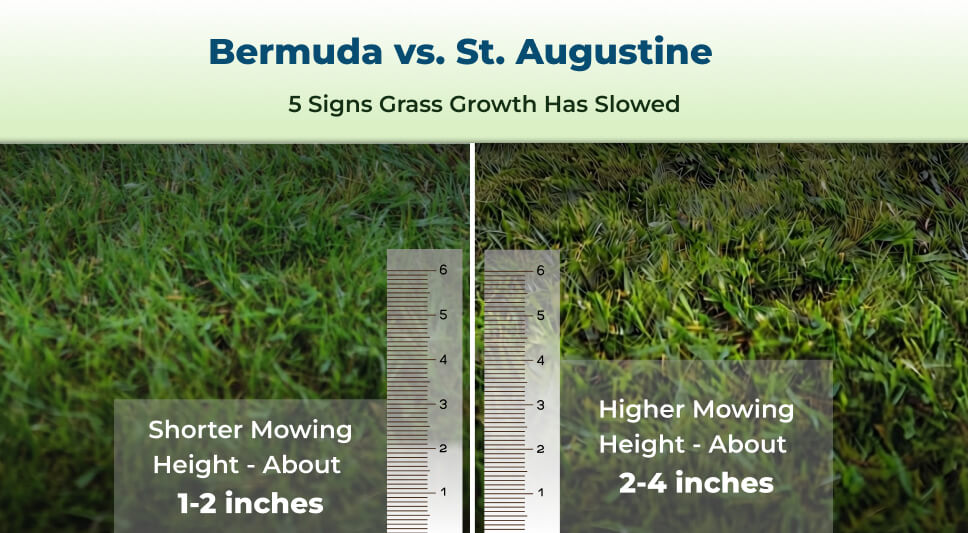

No. The two grasses need different mowing heights.
Bermuda home lawns are commonly kept around 1 to 2 inches. St. Augustine is commonly kept around 2 to 4 inches, with 2.5 to 3.5 inches used as a common range for rotary mowing.
That difference is not cosmetic. It affects how often the grass reaches the next cutting point and how much leaf tissue comes off during each cut.
A mower set for Bermuda can be too low for St. Augustine. A setting suited to St. Augustine can leave Bermuda much taller than intended.
The same rule applies after a missed mowing visit. If the grass has shot past its target height, do not take off a huge amount just to get back to the usual setting in one pass.
Cutting a large amount at once can put stress on the turf. Keeping the lawn within its intended height range makes each mowing session easier on the grass.
Which Grass Needs More Frequent Mowing?
There is no single answer for every Texas yard.
Bermuda is kept short and can grow at a fast pace during warm, moist conditions. That can create a need for frequent cuts.
St. Augustine stays taller, but that does not mean it can sit untouched for weeks during active growth.
The mowing interval comes down to the lawn in front of you.
A shaded St. Augustine lawn may grow at a different pace from a sunny Bermuda lawn. Two Bermuda lawns on the same street can also need different mowing cycles if their water supply, sun exposure, or growing conditions differ.
That is why grass type alone cannot set the entire mowing routine.
How to Build a Practical Lawn Mowing Schedule
Building a lawn mowing schedule can be as simple as watching what the grass does between cuts.
-
Check the Grass Type
Start with Bermuda or St. Augustine. Each has its own mowing height.
-
Set the Mower Height
Do not copy the setting from a neighbor’s lawn. Set the mower for the grass in your yard.
-
Watch the Growth
Note how many days pass before the grass reaches its mowing point.
-
Shorten the Gap During Active Growth
If the lawn is growing fast, a weekly cut may keep it within its target height.
-
Widen the Gap When Growth Slows
Cooler fall weather can reduce growth and cut down the need for frequent mowing.
-
Watch How Much Comes Off
If the lawn has grown far past its target height, avoid taking off a large amount in one session.
This gives you a schedule that can move with the lawn. Summer may bring weekly cuts. Fall may bring fewer visits. Dormancy can bring a pause.
When Does Professional Lawn Mowing Make Sense?
Not everyone wants to check grass height every few days and decide when the next mowing visit should happen.
Work, travel, family duties, and simple lack of time can make lawn mowing easy to push aside. By the time the mower comes out, the grass may have grown well past the height you wanted.
Recurring mowing can take that task off your list.
A weekly lawn mowing service can suit a yard during active growth, while a bi-weekly lawn mowing service may fit a slower growth period. The service interval should match the lawn instead of forcing every property onto the same cycle.
That can be useful for homeowners who want the mowing handled without having to keep track of every change in grass growth.
Looking for Affordable Lawn Care in Texas?
When comparing an affordable lawn care service in Texas, look at what the service includes and how its schedule fits your yard.
Ask about:
- Grass type
- Yard size
- Mowing frequency
- Seasonal changes
- Mowing work included
- Recurring or one-time visits
- Service area
A low price does not tell you whether the mowing schedule fits the lawn. The useful comparison is the service you receive for the price you pay.
Keep Your Texas Lawn on the Right Mowing Schedule With GOMOW
If you do not want to keep track of Bermuda or St. Augustine growth through every season, recurring mowing can take that job off your hands.
GOMOW Lawn Care Service gives Texas homeowners an option for professional lawn mowing support. A recurring schedule can be set around the lawn’s mowing needs, with the frequency changing as growth changes.
For a homeowner, that means less time watching the grass and trying to decide when the mower needs to come out.
Frequently Asked Questions
Is Bermuda or St. Augustine easier to mow in Texas?
Both have different mowing needs. Bermuda is kept at a shorter height, while St. Augustine is maintained taller. The right schedule depends on how fast each lawn grows.
How often should I mow Bermuda grass in Texas?
Bermuda can need weekly mowing during active growth. Check the grass height instead of relying on a fixed seven-day rule.
How often should I mow St. Augustine grass in Texas?
St. Augustine can need weekly mowing while growth is active. Cooler temperatures can slow growth and create a wider gap between cuts.
Should I mow Bermuda and St. Augustine at the same height?
No. Bermuda and St. Augustine have different mowing-height ranges. Set the mower based on the grass in your yard.
Is weekly mowing better than bi-weekly mowing?
The right interval depends on grass growth. Weekly mowing can fit fast growth, while bi-weekly mowing can fit a lawn that takes about two weeks to reach its mowing height.


